Bernard Hopkins vs Jermain Taylor

Fight Details
- Date: 16th July 2005
- Venue: MGM Grand, Las Vegas, Nevada
- Title: WBC, WBA, IBF & WBO World Middleweight Titles
- Promoter: Golden Boy Promotions & DiBella Entertainment
- Referee: Jay Nady
- TV: HBO PPV
Fighters
Bernard Hopkins
Record: 46-2-1
Weight: 160 lbs
Jermain Taylor
Record: 23-0-0
Weight: 160 lbs
Fight Summary
Jermain Taylor ended Bernard Hopkins’s ten-year reign as middleweight champion by taking a split decision over 12 closely contested rounds at the MGM Grand Garden Arena in Las Vegas on 16 July 2005. Taylor won by scores of 115–113 from judges Duane Ford and Paul Smith, while Jerry Roth gave Hopkins a considerably wider 116–112 verdict. Jay Nady was the referee. Both men weighed the middleweight limit of 160 pounds, although HBO’s unofficial ringside scale later showed Hopkins at 168 and Taylor at 171. Taylor entered unbeaten in 23 contests, while Hopkins brought a record of 46 wins, two defeats, one draw and one no-contest. The result transferred the WBA, WBC, IBF, WBO, Ring, and recognised world middleweight championships to the 26-year-old challenger.
Hopkins was 40 years old and had not lost for more than 12 years. Since winning the IBF title against Segundo Mercado in 1995, he had assembled 20 consecutive successful middleweight title defences, unifying the principal championships and defeating Félix Trinidad, William Joppy, Oscar De La Hoya and Howard Eastman. Taylor, an Olympic bronze medallist from Little Rock, Arkansas, represented the strongest young challenger available. He had beaten former champion Joppy and outpointed Eastman, and possessed a firm jab, considerable physical strength and a faster pair of legs. Hopkins started as the favourite, but the match had been presented as a possible transfer of authority from an ageing champion to a younger man approaching his prime.
Taylor began with greater purpose, moving forward behind his left jab while Hopkins remained near the perimeter, studying him. Neither man took many risks in the opening round, but Taylor’s activity and occupation of the centre gave him the advantage. He repeated the method in the second, doubling the jab and occasionally following with the right hand. Hopkins blocked or avoided many of the punches, yet offered too little in return to make a persuasive claim to either round. Taylor’s jab was not landing with great frequency, but it controlled the distance and obliged Hopkins to react. The champion’s preference for beginning cautiously had served him well throughout his reign, although on this occasion it allowed the challenger to accumulate early rounds without being required to absorb much punishment.
Hopkins began to increase his work during the third and fourth rounds. He moved closer, stepped around Taylor’s left foot and looked for the right hand over the jab. Taylor remained the busier boxer, but his punches were increasingly caught on Hopkins’s gloves or fell short as the champion leaned away. Hopkins scored with occasional right leads and short counters, though he continued to fight in brief bursts rather than sustain an attack. In the fifth, an accidental clash of heads opened a cut on the top of Taylor’s head. The wound was not serious enough to interrupt the contest, but it gave Taylor’s corner additional work and marked the beginning of a more difficult period for the challenger.
The middle rounds were close and often untidy. Taylor continued to advance, throwing the greater number of punches but landing at a low percentage. Hopkins was the more accurate man when he let his hands go, especially with the straight right and short punches inside. He also used his experience to turn Taylor, lean upon him in the clinches and prevent the younger man from developing a smooth rhythm. Taylor’s jab remained his principal scoring weapon, yet his right hand was less dependable, and his combinations rarely contained more than two punches. Hopkins’s economy made several rounds difficult to judge: Taylor appeared to be forcing the action, while Hopkins landed the cleaner blows but spent long intervals waiting.
By the ninth, Hopkins had begun to close the distance with greater confidence. Taylor’s early speed had diminished, and the challenger was breathing more heavily after carrying the fight towards the champion for much of the evening. Hopkins found increasing room for the right hand and worked more effectively at close quarters. The tenth was his clearest round. Two hard rights shook Taylor, causing his legs to dip and forcing him to clinch. Hopkins pressed him towards the ropes and landed further clean punches, but Taylor survived without going down. The champion continued his late advance in the eleventh, countering the slowing challenger and making him miss before answering with the right. Taylor remained upright and kept throwing, but the authority of the contest had shifted towards Hopkins.
The twelfth was fought with the decision plainly uncertain. Taylor attempted to recover the initiative with his jab and forward movement, while Hopkins looked for the cleaner counter and finished strongly. Neither man achieved a decisive breakthrough. The final bell left the judges to choose between Taylor’s early activity and Hopkins’s more accurate work over the closing rounds. HBO’s unofficial scorer Harold Lederman had Taylor ahead 115–113, the same margin returned by Ford and Smith. Roth’s 116–112 score for Hopkins reflected the view that the champion’s defence and cleaner punching had outweighed Taylor’s greater output. Many reporters at ringside also favoured Hopkins, although the match contained several rounds in which neither boxer established clear superiority.
The punch statistics illustrated the difficulty of the scoring. Hopkins landed 96 of 326 punches, while Taylor connected with 86 of 453. Hopkins held advantages in total punches landed, accuracy and power punches, connecting with 78 of 217 compared with Taylor’s 50 of 189. Taylor, however, landed twice as many jabs, 36 to 18, and his greater activity during the first half of the contest helped secure the narrow official verdict. Statistics alone could not decide the close rounds, but they supported Hopkins’s argument that he had landed the more effective blows.
Hopkins protested the decision and later appealed unsuccessfully to the Nevada State Athletic Commission. The result nevertheless stood, bringing one of the longest championship reigns in middleweight history to an end. Taylor had not defeated Hopkins conclusively, nor had he dominated him, but he had started more quickly, claimed enough of the early rounds and survived the champion’s strong finish. Hopkins’s tactical mistake was his delay in applying sustained pressure. By the time he began to control the exchanges, he had left himself too little room on the scorecards. The disputed verdict led directly to a rematch five months later, but on this night, Taylor became the recognised middleweight champion by the narrowest effective margin.

Gym Rat Assessment
I thought Bernard Hopkins lost this fight through his own stubbornness. Jermain Taylor was unbeaten, younger, stronger and an Olympic bronze medallist, but he was still stepping into deep water against a 40-year-old champion who had ruled the middleweights for a decade and made 20 successful defences. Taylor needed the early rounds, and Hopkins practically handed them to him.
Taylor worked behind the jab, occupied the centre and stayed busier while Hopkins watched, feinted and waited. That was Bernard’s way, but against a young challenger with quick legs and nothing to lose, he left himself too much to retrieve. The punch figures show how strange the fight was: Hopkins landed 96 punches to Taylor’s 86 and was far more accurate, yet Taylor threw 453 shots to Hopkins’s 326.
Once Taylor began tiring, Hopkins took over. He found the right hand, made the younger man look ragged and hurt him badly in the tenth. Taylor’s legs dipped, and he had to hold. By then, Hopkins was doing the cleaner work, but he had spent too many early rounds being clever without being productive.
The split scores of 115–113 twice for Taylor and 116–112 for Hopkins show how awkward the judging was. I had Hopkins edging it, but I cannot call it a robbery. Taylor banked rounds while Bernard waited, and judges are not paid to reward what a fighter intends to do later.
Hopkins was still the better craftsman. Taylor won because he started on time, remained upright under late pressure and made the old champion pay for his arrogance.
Bernard Hopkins vs Jermain Taylor on YouTube
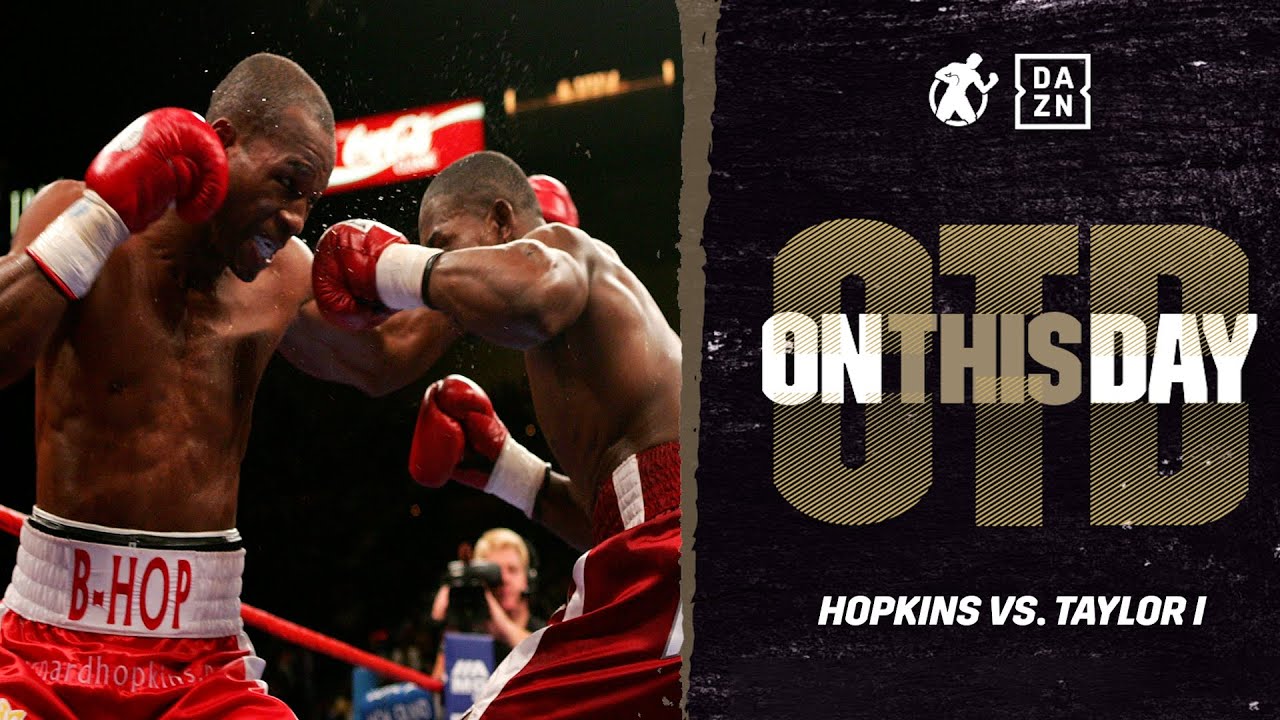
Event Poster

FAQ
Who won the Bernard Hopkins vs Jermain Taylor fight?
Jermain Taylor won by split decision.
When did Bernard Hopkins vs Jermain Taylor take place?
Bernard Hopkins vs Jermain Taylor took place on 16th July 2005.
Where did the Bernard Hopkins vs Jermain Taylor fight take place?
It took place at MGM Grand, Las Vegas, Nevada.
What titles were at stake in the Bernard Hopkins vs Jermain Taylor fight?
Bernard Hopkins and Jermain Taylor fought for the WBC, WBA, IBF & WBO World Middleweight Titles.
Comments (0)
Please log in to leave a comment
Loading comments...